
Play’n GO NZ: casino games provider review


Recommended Casinos Play’n GO


Play’n GO is a Swedish B2B iGaming content provider founded in 1997 and is considered an established supplier of online slots. The company remains privately owned and does not publish full financial results, although industry estimates place its 2025 revenue at around €85 million, supported by a workforce of 600+ employees.
Its core focus is slot development, where it is estimated to hold around a 5% share of the global supplier market. A key limitation is the absence of meaningful expansion into Live Casino or adjacent product verticals, positioning Play’n GO as a specialist slot-focused provider rather than a full-suite content studio.
Operationally, the company focuses on regulated jurisdictions, including markets governed by the UKGC, MGA, and other European regulators. Its strategy is built around long-term B2B partnerships and consistent content delivery, resulting in a stable distribution model and predictable growth trajectory. Compared to more aggressive providers active in emerging or lightly regulated markets, Play’n GO takes a more conservative approach to expansion.
Best NZ Casinos with Play’n GO Pokies in 2026
Play’n GO distributes its content through direct integrations with major operators and aggregators, which supports broad availability across multiple markets.
Key partnerships include established international operators such as Bet365 and LeoVegas, where Play’n GO titles are widely featured across slot portfolios. Aggregator networks, including SoftSwiss, further extend distribution across a wide range of white-label casino platforms.
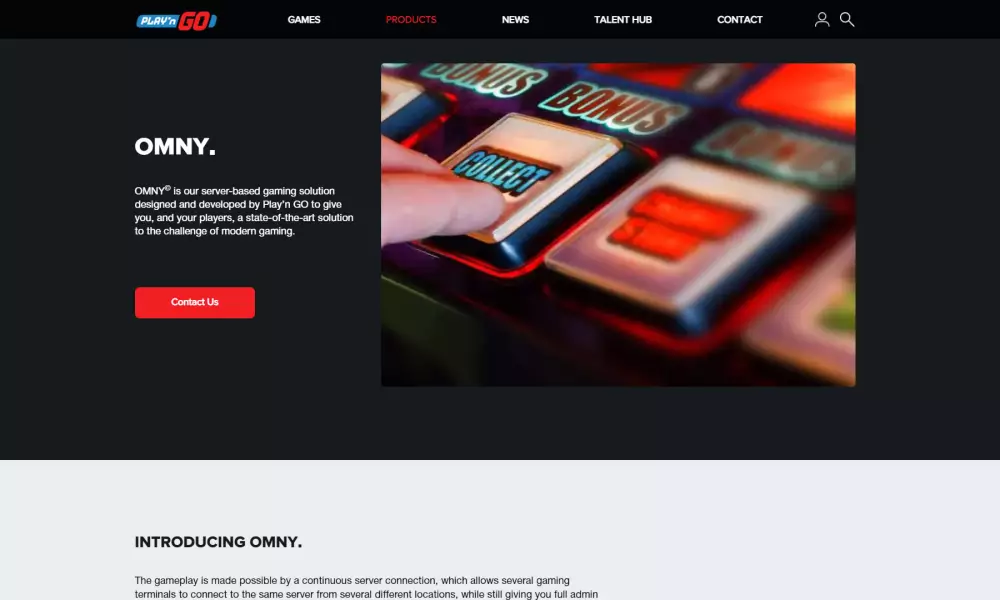
Regionally, the provider is active in markets such as Ontario (Canada), Belgium, and the Netherlands, supporting its position within regulated markets. All integrations are delivered via the OMNY platform API, which functions as a unified content delivery layer across operators.


New Play’n GO casino 2026 (NZ)










Why Players in New Zealand Choose Play’n GO Pokies
Play’n GO is an established provider, supported by consistent product quality and a development approach focused on long-lasting, engaging slot experiences.
The portfolio includes 350+ games, with a clear emphasis on bonus-driven gameplay — free spins, expanding features, and cascading mechanics are standard across many titles. The release cadence is steady, with regular additions keeping the library fresh without overwhelming operators or players.
One of the key advantages is the way Play’n GO builds game franchises. Instead of one-off releases, successful titles evolve into full series, supporting long-term player engagement and retention.
Mobile optimisation is another standout feature. All games are built in HTML5, delivering a smooth and consistent experience across desktop, mobile, and tablet — something players in markets like New Zealand increasingly expect as standard.
Who Should Play Play’n GO Pokies?
Play’n GO games are primarily aimed at players who enjoy high-volatility slots with strong bonus-driven mechanics.
The typical gameplay pattern involves longer base-game sessions, with wins clustered around bonus features that can deliver more significant payouts.
This portfolio is particularly well suited for players who enjoy:
- high-volatility slots
- bonus-focused gameplay
- mobile-first gaming
- classic video slots (without live dealer formats)
It’s worth noting that Play’n GO does not focus on live casino products or low-volatility, quick-cycle slots — something to keep in mind when choosing where to play.
Popular Play’n GO Pokies in NZ
Top 5 Play’n GO games based on popularity and aggregator rankings:
| Game Title | RTP (%) | Volatility | Max Win | Features | Status |
| Book of Dead | 96.21 | High | 5,000x | Expanding Symbols, Free Spins, Wilde Series | Active |
| Reactoonz | 96.51 | High | 4,570x | Cluster Pays, Gargantoon, Quantum Leap | Active |
| Legacy of Dead | 96.58 | High | 5,000x | 9 Expanding Symbols, Free Spins | Active |
| Moon Princess | 96.50 | High | 5,000x | Cluster Pays, Girl Power, Free Spins | Active |
| Rise of Olympus | 96.50 | High | 5,000x | Cluster Pays, Hand of God, Wrath of Olympus | Active |
RTP figures are taken from official game documentation and independently tested where applicable (e.g., GLI). Some jurisdictions, including the UK, may offer reduced RTP versions.
-
 Moon PrincessPlay’n GO
 -
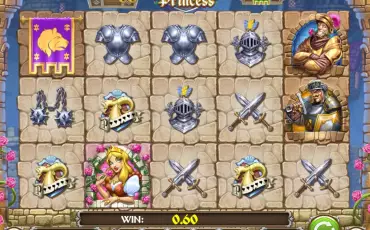 Prissy PrincessPlay’n GO
 -
 Planet FortunePlay’n GO
 -
 ReactoonzPlay’n GO
 -
 Viking RunecraftPlay’n GO
 -
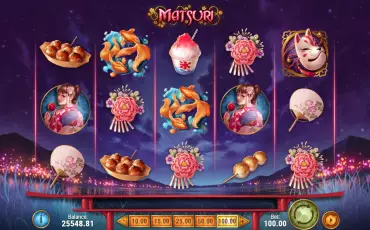 MatsuriPlay’n GO
 -
 Sails of GoldPlay’n GO
 -
 Merry XmasPlay’n GO
 -
 Wild Blood 2Play’n GO
 -
 Sweet AlchemyPlay’n GO
 -
 Sea HunterPlay’n GO
 -
 MultiFruit 81Play’n GO
 -
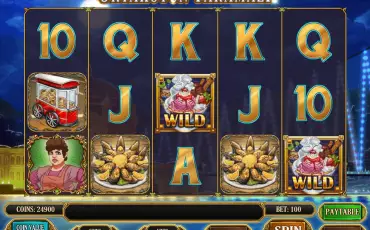 Ortaköyün Yaramazi (Village Kid)Play’n GO
 -
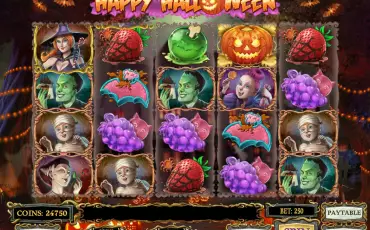 Happy HalloweenPlay’n GO
 -
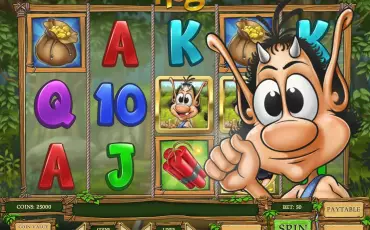 HugoPlay’n GO


New Play’n GO Pokies New Zealand 2026
-
 Sails of RichesPlay’n GO
 -
 3 Blades & BlessingPlay’n GO
 -
 Piggy Blitz Casino GoldPlay’n GO
 -
 Mandalay Bay RichesPlay’n GO
 -
 Mega Don Triple ThreatPlay’n GO
 -
 Mole DiggerPlay’n GO
 -
 Legacy of Undead Dragon AbysswaysPlay’n GO
 -
 Stadium of RichesPlay’n GO
 -
 Static Nightmare AbysswaysPlay’n GO
 -
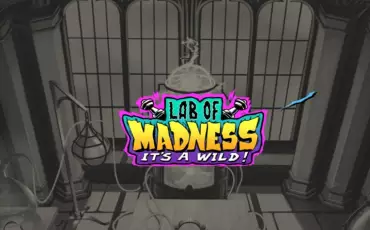 Lab of Madness - It's a Wild!Play’n GO
 -
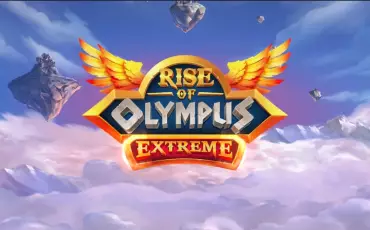 Rise of Olympus ExtremePlay’n GO
 -
 Fire Joker BlitzPlay’n GO


Table Games by Play’n GO
The table games segment plays more of a supporting role within the Play’n GO portfolio, covering core categories like roulette, blackjack, baccarat, and craps.
These are primarily RNG-based versions of classic games, with a focus on reliability, clean UX, and regulatory compliance rather than innovation. Within the broader product strategy, table games are not a primary focus compared to slots.
Roulette by Play’n GO
The roulette offering sticks closely to the European format (single zero), with a standard house edge of around 2.7%. The core product delivers a familiar experience, including racetrack betting and call bets.
Overall, it’s a clean, straightforward implementation — easy to use, with helpful stats (hot/cold numbers), but limited variation. Some versions include La Partage, though these are minor tweaks rather than distinct formats.
From an aggregator perspective, it sits slightly above average in UX, but remains fairly standard in terms of functionality.


Blackjack by Play’n GO
Blackjack is the most developed category within the table games lineup. Multiple variations (classic, European, multi-hand, Double Exposure) provide a reasonable level of flexibility.
The focus is on traditional rules and multi-hand gameplay, with RTP exceeding 99% when optimal strategy is applied — appealing to more experienced players.
At the same time, the design remains conservative. There’s little in the way of gamification or hybrid formats, positioning it as a reliable, no-frills option rather than a standout feature product.


Baccarat by Play’n GO
Baccarat follows a simplified, classic format (Mini / Pro versions), with standard bets (Banker, Player, Tie) and expected RTP ranges.
The emphasis is on speed and usability — quick rounds, minimal UI, and occasional visual enhancements like squeeze effects.
Overall, it’s a functional product that does the job well but doesn’t add significant competitive differentiation.
Craps by Play’n GO
Craps is a newer addition to the portfolio. Initially launched as a traditional version with immersive elements, it later evolved into GO Craps (2025), a mobile-first adaptation.
The core gameplay remains intact (Come Out, Point phases, standard bets), but the interface is simplified for accessibility, with clearer visuals and basic stat tracking.
From a positioning standpoint, it fills a gap in the portfolio, though it remains a niche offering rather than a core focus.
Game Features & Mechanics
Play’n GO builds its mathematical model around high-volatility slots, where most of the win potential is tied to bonus features rather than base gameplay. Across the portfolio, RTP typically sits in the ~94–97% range, with a large share of returns coming from free spins, multipliers, and extended feature mechanics.
A defining characteristic of these pokies is the emphasis on high volatility, meaning wins don’t land as often — but when they do, they can be considerably larger. In practice, this creates a familiar cycle: longer base-game stretches followed by sharper payout spikes triggered by bonus rounds.
Core architecture: Grid Slots and Cluster Pays
At the core of Play’n GO’s design is its Grid Slots system — a shift away from traditional paylines towards grid-based layouts (commonly 5x5 or variable formats), where wins are formed by clusters of matching symbols rather than fixed lines.
This is combined with the Cluster Pays mechanic, where payouts are triggered by groups of 5 or more identical symbols. Once a win hits, a cascading system kicks in: winning symbols disappear, new ones drop in, and additional wins can chain together within the same spin.
This structure underpins well-known titles like Reactoonz, Moon Princess, and Rise of Olympus, giving Play’n GO a distinct and recognisable mathematical identity.
Signature bonus mechanics
On top of the core grid framework, Play’n GO layers in proprietary bonus systems that add depth and variation to gameplay:
- Expanding Symbols (Book of Dead series) — during free spins, a selected symbol can expand to cover an entire reel, significantly increasing win potential
- Quantum Leap / meter systems (Rise of Olympus) — progression-based features where wins charge meters that unlock enhanced bonus effects
- Cascading bonus structures — a core element across many high-volatility slots, extending win sequences within a single spin
Modern extensions of the model
In more recent releases, Play’n GO has introduced additional layers of variability through advanced mechanics:
- Gargantoon (Reactoonz) — a transforming wild feature that reshapes the grid and boosts cascade potential
- Blitzways (2025) — a dynamic reel system with up to 16,807 ways to win, changing configuration on every spin
RTP & Volatility
The portfolio is heavily weighted towards high-volatility slots. Rather than focusing purely on headline RTP, the key factor is how that RTP is distributed — with most value sitting in bonus rounds.
Medium-volatility games exist, but mainly as supporting content. Low-volatility titles are not a major focus.
Maximum Win Potential
Maximum win potential generally ranges from 2,000x to 5,000x, in line with typical high-volatility models.
Some advanced or branded titles push significantly higher (up to 30,000x–50,000x), though these are exceptions rather than the norm.
Bonus Buy Feature
Play’n GO does not offer Bonus Buy in any of its games. All bonus features must be triggered through standard gameplay.
Best Play’n GO bonuses in NZ
-
 Free €10 Bonus at Slottica Casino10 €max. amountx75Wager
 -
 Free 5 Euro for Registering at Lucky Bird Casino5 €max. amountx75Wager
 -
 Free €5 Bonus for Registering at SlottyWay Casino5 €max. amountx75Wager
 -
 Free €5 Bonus for Registering at AllRight Casino5 €max. amountx75Wager
 -
 Welcome Bonuses and Free Spins at 1xBet Casino200%Bonus1 500 $max. amountx35Wager
 -
 Huge High Roller Bonuses at Cat Casino100%Bonus25 000 $max. amountx35Wager


Jackpots & Bonus Features
Play'n GO focuses on fixed jackpots with predefined values rather than network-wide progressive jackpots, unlike competitors such as Playtech and NetEnt. Instead of relying on large pooled prizes, the provider puts more emphasis on in-game bonus mechanics, where most of the win potential is built directly into the gameplay.
Fixed jackpots are available in titles like Cat Wilde and the Pyramids of Dead, Bell of Fortune, Speed Cash, and Golden Goal, with clearly defined maximum payouts set within each game’s rules.
The newer GO Collect mechanic (2026), introduced in Book of Dead GO Collect, adds a collection-based system using Gold Staters to trigger the Treasure Vault Respin feature, giving players an additional path to higher payouts.
| System | Type | Levels | Seed | Contribution |
| Fixed Jackpots | Fixed | Predefined | Predefined values | Defined by game rules |
| Treasure Vault (GO Collect) | Feature | Collection | Gold Staters | Scatter symbols |
Maximum win potential in key titles includes: Book of Dead — 5,000x (RTP 96.21%), Reactoonz — 4,570x (96.51%), KISS Reels of Rock — up to 50,000x (96.20%), Ronin's Honour — 30,000x (96.22%), and Aztec Idols — 22,275x (96.65%).
Overall, higher payouts are typically driven by Wild multipliers, cascading wins, and bonus features rather than progressive jackpot systems — which aligns with Play’n GO’s broader focus on high-volatility gameplay.
Play’n GO Official Site (NZ)
Company History
The story of Play’n GO goes back to the late ’90s, with steady, organic growth rather than big, risky leaps. The company has built its reputation over time by focusing on product consistency and market expansion.
Key milestones:
- 1997 — Founded in Växjö, Sweden
- 2004 — Transition to a fully independent studio with its own brand direction
- 2005 — Early move into mobile gaming (well before smartphones took off)
- 2012 — Malta Gaming Authority licence secured
- 2013 — Launch of Energoonz, introducing the first Grid Slot
- 2016 — Release of Book of Dead and entry into the UK market (UKGC licence)
- 2017 — Launch of Reactoonz and Moon Princess
- 2018 — Rise of Olympus released; expansion into Italy
- 2019 — First branded title (Sabaton)
- 2020 — Reactoonz 2, Legacy of Dead; partnership with SoftSwiss
- 2021 — Expansion into Greece and Argentina; KISS Reels of Rock
- 2022 — Ontario licence (AGCO/iGO); North America push
- 2023 — Entry into multiple US states; Haas F1 partnership
- 2024 — EGR Italy Award; expansion into South Africa
- 2025 — 20-year milestone; launch of Blitzways and CrashBack
- 2026 — Release of Book of Dead GO Collect
Overall, it’s a classic case of steady scaling—no shortcuts, just consistent delivery.
Business & Market Presence
Play'n GO has shown steady, long-term growth over the past decade, with average annual revenue increasing by around 20%. While the company remains privately owned and does not publish full financial reports, industry estimates provide a clear picture of its scale and market position.
According to iGaming Business, Play’n GO holds roughly a 5% share of the global slot supplier market, placing it among the top-tier providers worldwide. Its workforce has expanded from around 150 employees in 2016 to 600+ in 2025, alongside a significant increase in content output—from 24 releases per year to around 60.
The company’s reach has also grown from 12 markets to more than 30 jurisdictions globally. While New Zealand does not operate a locally regulated online casino framework, Play’n GO’s presence in markets such as the UK, the EU, and Ontario is generally viewed as a relevant indicator of its compliance standards.
| Year | Revenue | Growth % | Employees | New Games | Markets |
| 2016 | €15M | - | 150 | 24 | 12 |
| 2017 | €20M | 33% | 200 | 28 | 15 |
| 2018 | €28M | 40% | 250 | 32 | 18 |
| 2019 | €35M | 25% | 300 | 36 | 20 |
| 2020 | €42M | 20% | 350 | 40 | 22 |
| 2021 | €50M | 19% | 400 | 44 | 25 |
| 2022 | €58M | 16% | 450 | 48 | 27 |
| 2023 | €65M | 12% | 500 | 52 | 28 |
| 2024 | €75M | 15% | 550 | 56 | 30 |
| 2025 | €85M | 13% | 600+ | 60 | 30+ |
Market position: generally considered a top-5 global slot provider and a leading name in the Grid Slots segment, with a strong presence in European markets and ongoing expansion across North America.
Ownership & Management
Play’n GO remains privately owned, which allows for tighter control over product direction and long-term strategy.
Leadership is still closely tied to its founders:
- Johan Törnqvist (CEO) — overall strategy and operations
- Ebba Arnred (CMO) — brand and market positioning
- Magnus Olsson (Commercial Director) — global partnerships and scaling
This structure keeps decision-making centralised and consistent, rather than driven by external shareholders.
Financial Results
The company’s growth curve shows a clear shift:
- 2017–2018: rapid expansion phase (new markets + hit titles)
- Post-2020: more measured, sustainable growth
Today, performance is driven less by individual breakout titles and more by steady content output, gradual market expansion, and long-term operator partnerships.
Market Expansion
Play’n GO follows a regulated-first strategy, sticking strictly to mature jurisdictions.
Core regions:
- Europe (MGA, UKGC, and local EU regulators)
- North America (Ontario + selected US states)
- LATAM (Colombia, Argentina)
- Asia (via PAGCOR in the Philippines)
In markets like New Zealand, where online casino regulation is limited and most activity takes place via offshore operators, Play’n GO’s focus on jurisdictions with established licensing regimes generally reflects tighter operational standards.
Partnerships & Deals
Unlike many competitors, Play’n GO doesn’t rely on acquisitions.
Growth is:
- organic
- driven by B2B partnerships
- scaled through aggregators and direct integrations
This keeps the company independent and avoids the complexity of being part of a larger gaming group.
Growth Strategy
The strategy is straightforward and consistent:
- 50–60 new slots per year (around 4–6 per month)
- ongoing refinement of existing mechanics rather than frequent reinvention
Rather than shifting direction with trends, Play’n GO focuses on evolving core systems such as bonus features, cascading wins and multiplier mechanics. This helps maintain familiarity across the portfolio while still introducing variation over time.
Team & Offices
The company operates a distributed European setup, with Sweden as the core hub for development and product design.
Key functional areas:
- game development
- maths & analytics
- commercial partnerships
- brand & communications
This structure allows the team to:
- maintain a high release cadence
- adapt content to different regulatory markets
Licensing, Security & Fair Play
Play’n GO holds a broad set of international licences, giving it access to the key regulated regions.
Key licences include:
- Malta (MGA)
- United Kingdom (UKGC)
- Gibraltar
- Romania (ONJN)
- Belgium
- Greece (HGC)
- Ontario, Canada (AGCO/iGO)
- Philippines (PAGCOR)
Testing & certification:
- Gaming Laboratories International (GLI)
- BMM Testlabs
- Quinel
- ISO 27001 (security standard)
Security stack:
- SSL/TLS encryption
- AWS hosting (EU – Frankfurt)
- DDoS protection
- GDPR-compliant data handling
No major data breaches have been reported.
Responsible gambling tools include:
- Reality Check
- Session timers
- Self-exclusion
- Deposit limits
- KYC verification
For NZ players using offshore sites, this level of compliance is a strong trust signal.
Awards & Industry Recognition
Play’n GO consistently ranks among top suppliers in the industry, picking up awards for both product quality and innovation.
Recent highlights:
- 2024 — Software Supplier of the Year (EGR Italy)
- 2024 — Slot Supplier of the Year (5 Star Media Awards)
- 2024 — RNG Casino Supplier of the Year
- 2024 — Game Studio of the Year (SlotCatalog / SBC)
- 2023 — Slot Provider of the Year (EGR Awards)
- 2023 — Mobile Supplier of the Year (EGR Awards)
It’s a well-decorated provider, particularly in the RNG and slot innovation space.
Top3 Play’n GO casinos
New Play’n GO bonuses 2026
-
 Up to 250 USDT on your first deposit at Livecasino50%Bonus250 $max. amountx15Wager
 -
 Welcome package at Vulkan Vegas: up to €1,500 + 150 FS150%Bonus1 500 $max. amountx40Wager
 -
 100% + 50 free spins on your first deposit at Aplay100%Bonus200 €max. amountx27Wager
 -
 Up to 7000 USDT and 260 free spins on your first three deposits at Weiss125%Bonus7 000 $max. amountx40Wager
 -
 100% on your first deposit up to 1 BTC at Cryptorino Casino100%Bonus61 000 €max. amountx66Wager
 -
 Welcome bonus up to 1 BTC on your first deposit at Betpanda100%Bonus60 000 €max. amountx80Wager





Alternative providers



































Mobile Play & Technology
From a tech perspective, Play’n GO sits firmly in the top tier.
Core strengths:
- Full HTML5 optimisation across all games
- Seamless cross-device play via the OMNY® platform
- Early mover in mobile (as far back as 2005)
Games run consistently across:
- desktop
- smartphones
- tablets
Tech stack:
- HTML5
- JavaScript
- WebGL
Infrastructure:
- AWS (EU servers)
- GDPR-compliant hosting
Key proprietary systems:
- Blitzways™ (dynamic reels)
- CrashBack™ (re-entry mechanic)
- Grid Slot engine
- Quantum Leap system
- OMNY® platform
All titles are independently tested for fairness, and performance on mobile is consistently strong — reflecting the importance of mobile-first gameplay in offshore casino markets such as New Zealand.
Final Verdict
Final verdict: Play’n GO is a long-established slot provider with a consistent focus on licensed markets and steady content output.
Its strengths lie in high-quality slot design, strong mobile performance and a predictable release strategy. While the absence of Live Casino and progressive jackpot systems limits its breadth, the provider remains competitive within the online slots segment.
For New Zealand players accessing offshore casinos, Play’n GO is generally regarded as a reliable choice for feature-rich, higher-volatility slots.
Frequently asked questions
Play’n GO develops online pokies, Grid-based slots, classic table games, and video bingo titles. The portfolio includes 350+ games, with around 50 new releases each year
Key titles include Book of Dead, Reactoonz, Legacy of Dead, Moon Princess, and Rise of Olympus. Book of Dead remains one of the most widely recognised slots and has expanded into a broader game series.
Yes. Play’n GO holds licences from major authorities such as the UK Gambling Commission and Malta Gaming Authority. All games are independently tested by labs including Gaming Laboratories International (GLI), BMM Testlabs, and Quinel
RTP typically ranges from 94% to 97%, with many popular titles above 96%. Examples: Book of Dead — 96.21%; Reactoonz — 96.51%; Legacy of Dead — 96.58%; Gemix — up to 96.75%. Some jurisdictions (including the UK) may use lower RTP configurations (around ~94%).
Yes. All games are built in HTML5 and run across mobile, tablet, and desktop devices. The OMNY® platform ensures consistent performance across screen sizes
Play’n GO is licensed in multiple jurisdictions, including the UK, Malta, Gibraltar, Ontario (Canada), Belgium, and Greece. The company operates across 30+ markets globally.
Games are delivered via the OMNY Game Server API. Integration typically takes several weeks, depending on the operator setup
No. The provider focuses on fixed jackpots. Win potential is built into bonus features, multipliers, and base game mechanics.
Yes. The Rock Series includes titles featuring artists such as KISS, Sabaton, Alice Cooper, and Def Leppard.
Blitzways is a dynamic reel system where reel height changes on each spin. It can offer up to 16,807 ways to win.
CrashBack is a feature in crash-style games that allows players to re-enter a round by wagering previous winnings.
Play’n GO games are available across Europe, North America (including Ontario), parts of LATAM, and selected Asian jurisdictions.
Contact is available via email (marketing@playngo.com). The company operates globally with headquarters in Malta
Demo versions are available via official channels, aggregators, and many casino review platforms without registration.
Tools include Reality Check, session limits, self-exclusion, deposit limits, and KYC verification. These are typically implemented at the operator level.
- Flagship portfolio led by Book of Dead, one of the most widely recognised slot titles, often used as a benchmark across casino libraries
- Distinct game design built around mechanics such as Grid Slots and Cluster Pays, differing from traditional payline formats
- Typical RTP range of ~94%–97%, with games independently tested by accredited labs
- Fully mobile-optimised portfolio (HTML5), with stable performance across smartphones and tablets
- Steady release pipeline (50+ titles per year), supporting consistent content turnover in casino lobbies
- Presence across 30+ jurisdictions, including the UK and Canada, indicating a focus on licensed markets
- Regular industry awards across slots, mobile, and RNG categories
- No Live Casino offering — focus remains on RNG slots and table games
- No network progressive jackpots; win potential is built into base mechanics and bonus features
- Portfolio is heavily weighted towards high-volatility gameplay, which may not suit all player types
- RTP variations across jurisdictions (including the UK), where some versions are configured at lower return levels

To leave a comment, you must log in:


| Information | |
| Website | https://www.playngo.com/ |
| Site languages | English |
| Foundation date | 1997 |
| Downloadable version | No |
| Flash version | Yes |
| Mobile version | Yes |
| Live version | No |
| Casinos using the software | 199 |
| Blacklisted casinos | 37 |
| Closed casinos | 2 |
| Jurisdiction | Malta, United Kingdom, Alderney |
| Auditors | Gaming Laboratories International, LLC, BMM Testlabs |
| Contact details | |
| Post address | Industrigatan 9, Växjö, SE-352 36, SE |
-
6.3
-
6.1
-
6.6
-
5.4
-
6.2
-
5.3
-
6.6
-
5.6
-
6
-
7.8